

At Integrative Sports & Spine, we provide advanced, non-surgical knee pain treatments for conditions such as arthritis, ligament injuries, and joint inflammation. Our expert team helps improve mobility, reduce pain, and support long-term recovery at our clinics in Long Beach, Riverside, Alhambra, and City of Industry.
.avif)
Most knee pain treatments are completed within 30 minutes with minimal disruption.
.avif)
Most patients return to light daily activities within 24 to 72 hours following treatment.
.avif)
Location Available
Knee Pain Treatment is available at our Southern California clinics - Long Beach, Alhambra, Riverside, and City of Industry.
The knee is one of the largest and most complex joints in the body, responsible for supporting your weight while allowing bending, straightening, and a degree of rotation. Its stability depends on the precise balance of bones, cartilage, ligaments, tendons, and fluid-filled bursae, which makes it prone to both acute injuries and chronic degenerative conditions.
Knee pain can originate from cartilage, ligaments, tendons, bursae, or the bone itself, and each source requires a specific approach. At Integrative Sports & Spine, we perform a thorough evaluation, including medical history, physical examination, and imaging review, to identify the exact cause of your pain before recommending treatment.
Depending on your diagnosis, your personalized care plan may include corticosteroid or hyaluronic acid injections, platelet-rich plasma (PRP) therapy, genicular nerve or trigger point injections, and targeted physical therapy. Our goal is to relieve pain, restore function, and protect the joint, helping you regain mobility and return to daily activities safely.
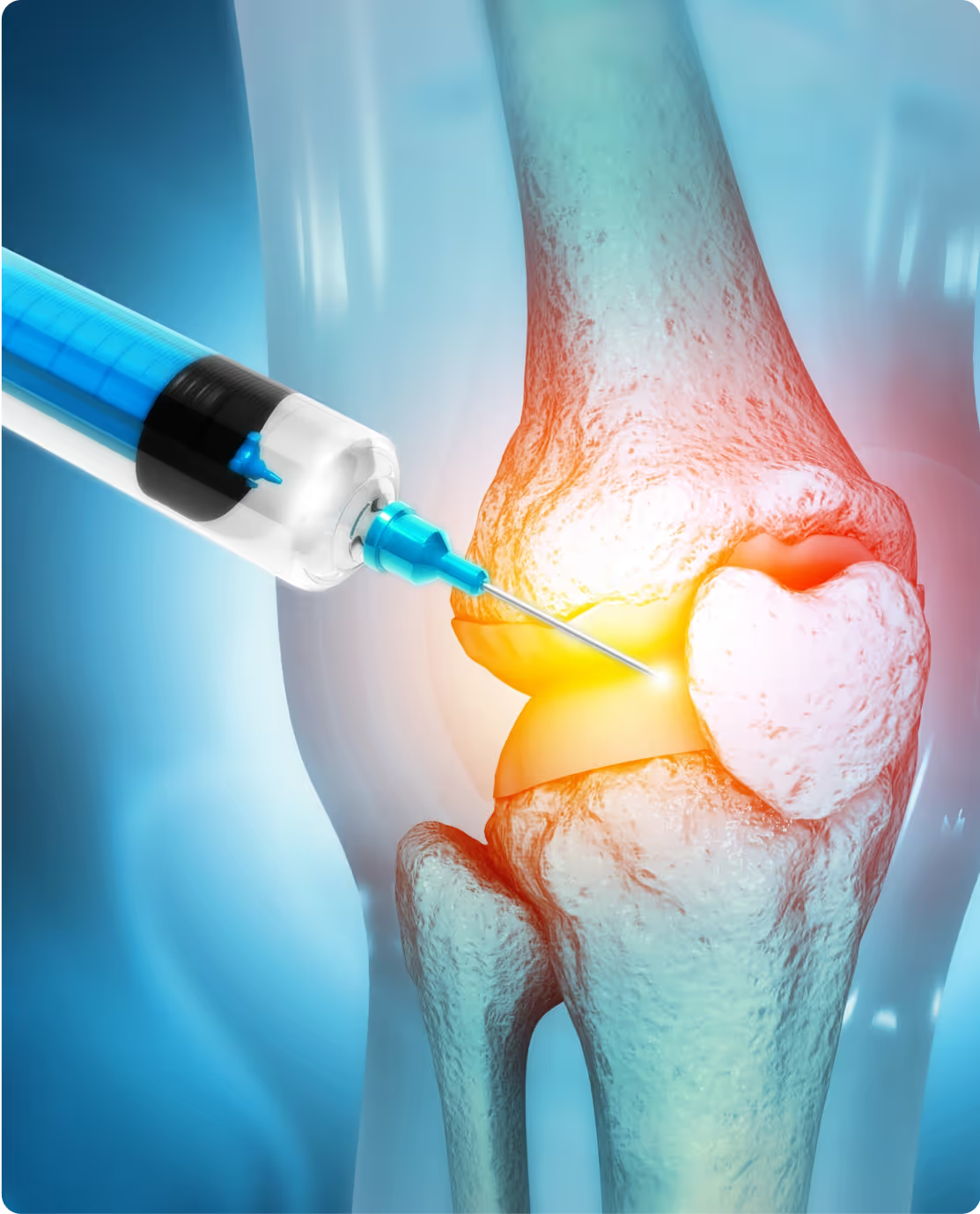
Knee pain can arise from many different structures, and treating the wrong source prolongs discomfort. Our thorough evaluations including clinical exams, imaging, and diagnostic injections ensure every treatment addresses the exact cause of your pain
Most knee conditions, from arthritis and meniscal damage to bursitis and tendinopathy, respond well to targeted, non-surgical therapies. We focus on interventions that relieve pain and restore function while avoiding unnecessary surgery whenever safely possible.
Our regenerative treatments and injections do more than ease pain, they help protect cartilage, reduce inflammation, and restore mobility. This approach preserves the knee’s long-term function and allows you to move with confidence in daily activities.
Targeted, interventional treatments relieve knee pain more effectively than oral medications alone, helping decrease dependence on NSAIDs, acetaminophen, and other pain-relief drugs while minimizing their long-term risks.
Knee Osteoarthritis
A degenerative joint disease where the cartilage that cushions the knee wears down over time. This leads to pain, stiffness, swelling, and limited mobility. Injections reduce inflammation, restore joint lubrication, and can stimulate healing to improve function and slow further degeneration.
Meniscal Tears
The meniscus is cartilage that acts as a shock absorber between the thigh and shin bones. Tears can result from injury or age-related wear, causing swelling, catching, or locking of the knee. Targeted injections calm inflammation, relieve pain, and allow the joint to function more smoothly.
Patellofemoral Pain Syndrome (Runner’s Knee)
Pain around the kneecap caused by misalignment, overuse, or muscle imbalance. Injections reduce inflammation at the joint and surrounding tissues, while addressing the underlying movement issues helps prevent recurrence.
Patellar Tendinopathy (Jumper’s Knee)
Degeneration or overuse of the tendon connecting the kneecap to the shin leads to localized pain and weakness. PRP injections deliver growth factors to the tendon, stimulating repair and restoring strength.
Knee Bursitis
Inflammation of the fluid-filled sacs (bursae) that cushion the knee causes swelling, tenderness, and pain during movement. Corticosteroid injections quickly reduce inflammation, relieve discomfort, and improve range of motion.
Ligament Injuries and Instability
Partial tears or chronic laxity of ligaments like the ACL or MCL can cause instability and ongoing pain. Injections can reduce inflammation, support healing, and help restore joint stability, sometimes avoiding the need for surgery.
Genicular Nerve-Mediated Knee Pain
In chronic knee conditions such as osteoarthritis, pain can be amplified by overactive nerves around the joint. Genicular nerve blocks interrupt these pain signals, providing targeted relief and improving daily function.
Post-Surgical Knee Pain
After procedures like arthroscopy, ligament repair, or partial knee replacement, some patients experience persistent pain due to inflammation or scar tissue. Injections target these areas to reduce pain and support rehabilitation.
Preparation Guidelines• Avoid applying heat or ice to the knee before your appointment.
• Wear or bring loose-fitting shorts or pants that can be easily rolled up to expose the knee.
• Bring a complete list of all medications, supplements, and blood thinners you are currently taking.
• Notify your physician of any known allergies particularly to local anesthetics, corticosteroids, or hyaluronic acid products.
• Bring any existing MRI, X-ray, or ultrasound imaging of the knee if available.
• Inform your physician if you have a known allergy to poultry products, as some hyaluronic acid formulations are derived from rooster comb.
Initial ConsultationYour care begins with a comprehensive one-on-one evaluation by one of our physicians. We take a full medical history, perform a detailed physical examination of the knee including assessment of range of motion, ligament stability, meniscal provocation tests, and patellar tracking and review any existing imaging. We take the time to understand not only your pain but your activity level, functional goals, and personal preferences so that your treatment plan is genuinely built around you.
Comfort and Preparation• The knee area will be thoroughly cleaned and numbed with a local anesthetic to ensure your comfort throughout the procedure.
Targeted Treatment• Using real-time ultrasound guidance, your physician precisely injects the affected joint, bursa, or tendons with the appropriate therapy. Procedures typically take 15 to 30 minutes, and you are monitored briefly afterward before being safely cleared to go home.
Immediate Recovery• Most patients return home the same day shortly after the procedure.
• Mild soreness, warmth, or a temporary increase in knee discomfort in the first 24 to 48 hours following the injection is normal and typically resolves quickly.
• Apply ice to the treated knee for 15 to 20 minutes every 2 to 3 hours to manage any post-procedure discomfort and swelling.
• Avoid prolonged standing, walking, or stair climbing on the day of the procedure.
.avif)
First 72 Hours
• Avoid strenuous physical activity, high-impact exercise, and activities that place significant load on the knee.
• Keep the injection site clean and dry.
• Take prescribed medications only as directed by your physician.
• Contact our office promptly if you experience severe pain, significant new swelling, fever, or redness suggesting possible infection following the procedure.

Long-Term Recovery
• Resume light daily activities gradually over the first one to two weeks in accordance with your physician's guidance.
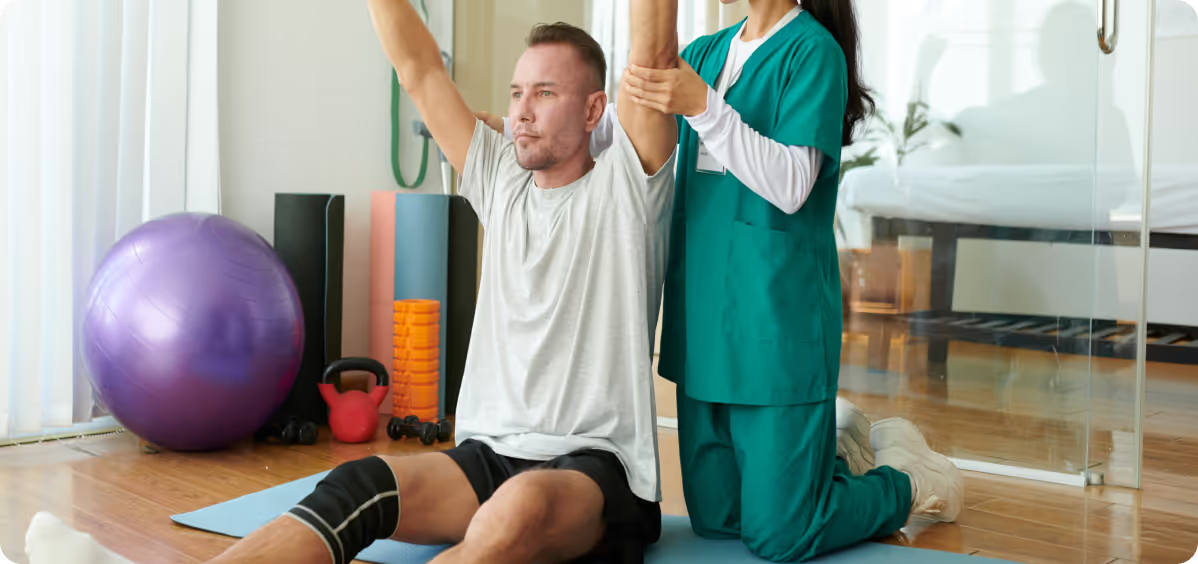
• Begin your prescribed physical therapy program as directed like quadriceps and hamstring strengthening, neuromuscular control training, and movement pattern correction are essential to sustaining the benefits of your treatment and protecting the knee from further damage.
• Attend all scheduled follow-up appointments so your physician can monitor your progress and refine your care plan as needed.
• Full benefits from regenerative treatments such as PRP and hyaluronic acid injections typically develop progressively over four to twelve weeks following the procedure.
• Implement any recommended activity, footwear, or weight management modifications to reduce mechanical stress on the knee and support long-term joint health.
Knee and Musculoskeletal Specialists
Our physicians bring focused expertise in knee anatomy and interventional treatments. We evaluate how your hip, lumbar spine, and lower limb mechanics influence your knee to create a personalized plan that targets the true source of your pain.
Ultrasound-Guided Precision
Accurate needle placement is critical for knee injections. Using real-time ultrasound, we ensure medications or biologics reach exactly where they are needed, improving results and speeding recovery.
Non-Surgical Pain Treatment
Many patients with osteoarthritis, meniscal tears, or tendon problems achieve lasting relief without surgery. Our combination of targeted injections, regenerative therapies, and rehabilitation restores mobility and function while minimizing risks.
Advance Regenerative Treatments
We offer cutting-edge therapies such as PRP and hyaluronic acid injections to reduce inflammation, support tissue repair, and protect joint health. Our approach goes beyond temporary pain relief to help you regain strength and return to daily activities.

If your knee pain lasts more than 2–3 weeks, limits walking or daily activities, follows an injury, or comes with swelling or instability, it’s time for an evaluation. Early diagnosis improves treatment effectiveness and protects the joint.
Corticosteroid injections reduce inflammation quickly and are best for acute flares. Hyaluronic acid injections restore joint lubrication and help manage ongoing arthritis. Many patients benefit from a combination, timed according to their condition.
Typically, 1–3 injections spaced several weeks apart are used, but some patients improve after a single injection. Your doctor will tailor the protocol based on your knee’s response and severity of arthritis.
Yes. For mild to moderate arthritis, a structured plan of injections and rehabilitation can provide years of pain relief, restore function, and in many cases delay or even avoid surgery.
Absolutely. Combining injections with targeted exercises addresses muscle weakness, joint mechanics, and movement patterns, improving outcomes and supporting long-term joint health.
Knee pain can sometimes be referred from the hip or lumbar spine. Our diagnostic evaluation identifies all contributing sources so your treatment plan targets the true cause, not just the symptom.
.png)
Treated for knee osteoarthritis
"After years of knee pain and failed treatments, the injections and care here gave me my active life back. I can now play with my grandchildren and enjoy walking without worrying about pain."

Treated for meniscal tear
"I was hesitant about injections, but the knee pain treatment helped me avoid surgery. I’m walking comfortably again and even back to yoga and light hiking."
Treated for patellar tendinopathy
"Chronic tendon pain was stopping me from running. The targeted injections combined with rehab got me back on the track faster than I expected."

Knee pain that limits your movement, steals your independence, and keeps you from the activities you love is not something you have to simply manage or endure. Our knee pain specialists at Integrative Sports & Spine offer proven and non-surgical solutions for you.
Call (833) 476-7377 or click the appointment button below to schedule consultation at any of our four Southern California pain clinic locations.
A premier non-surgical treatment for knee osteoarthritis, restoring the natural cushioning and lubrication of the joint to reduce pain, improve mobility, and slow the progression of cartilage loss.
View MoreA powerful regenerative option for knee cartilage, tendon, meniscal, and ligament conditions, delivering your body's own growth factors directly to damaged tissue to stimulate repair and provide lasting functional improvement.
View MoreLumbar spine conditions frequently contribute to altered gait patterns and biomechanical dysfunction that place excessive stress on the knees. Addressing lower back pathology is often an essential component of comprehensive knee pain management.
View More
.png.avif)