Bursitis occurs when the fluid-filled bursae that cushion your joints become inflamed, causing pain, swelling, and limited movement. At Integrative Sports & Spine, we provide non-surgical bursitis treatment to relieve pain, reduce inflammation, and restore mobility. Schedule a consultation at one of our clinics today.
.avif)
Bursa injection procedures are completed quickly in a single visit with minimal disruption to your schedule.
.avif)
Most patients resume normal daily activities within 24 to 48 hours following a bursa injection procedure.
.avif)
Locations Available
Bursitis Treatment is available at our Southern California clinics - Long Beach, Alhambra, Riverside, and City of Industry.
Most bursitis cases develop gradually from repetitive mechanical stress and can be evaluated through a scheduled specialist appointment. However, a bursa can become infected, a condition called septic bursitis, and this is a medical emergency that requires immediate evaluation and treatment. Infected bursitis and inflammatory bursitis can look similar on initial inspection, which makes recognizing the distinguishing features of infection critically important.
Seek Immediate Medical Evaluation If You Notice:

Bursitis is not always the true source of joint pain. Tendon injuries, arthritis, and nerve conditions can produce similar symptoms. We use diagnostic ultrasound to evaluate the affected bursa, identify signs of inflammation, and examine the surrounding soft tissues. This allows us to confirm the diagnosis and develop a treatment plan based on the actual cause of your pain.
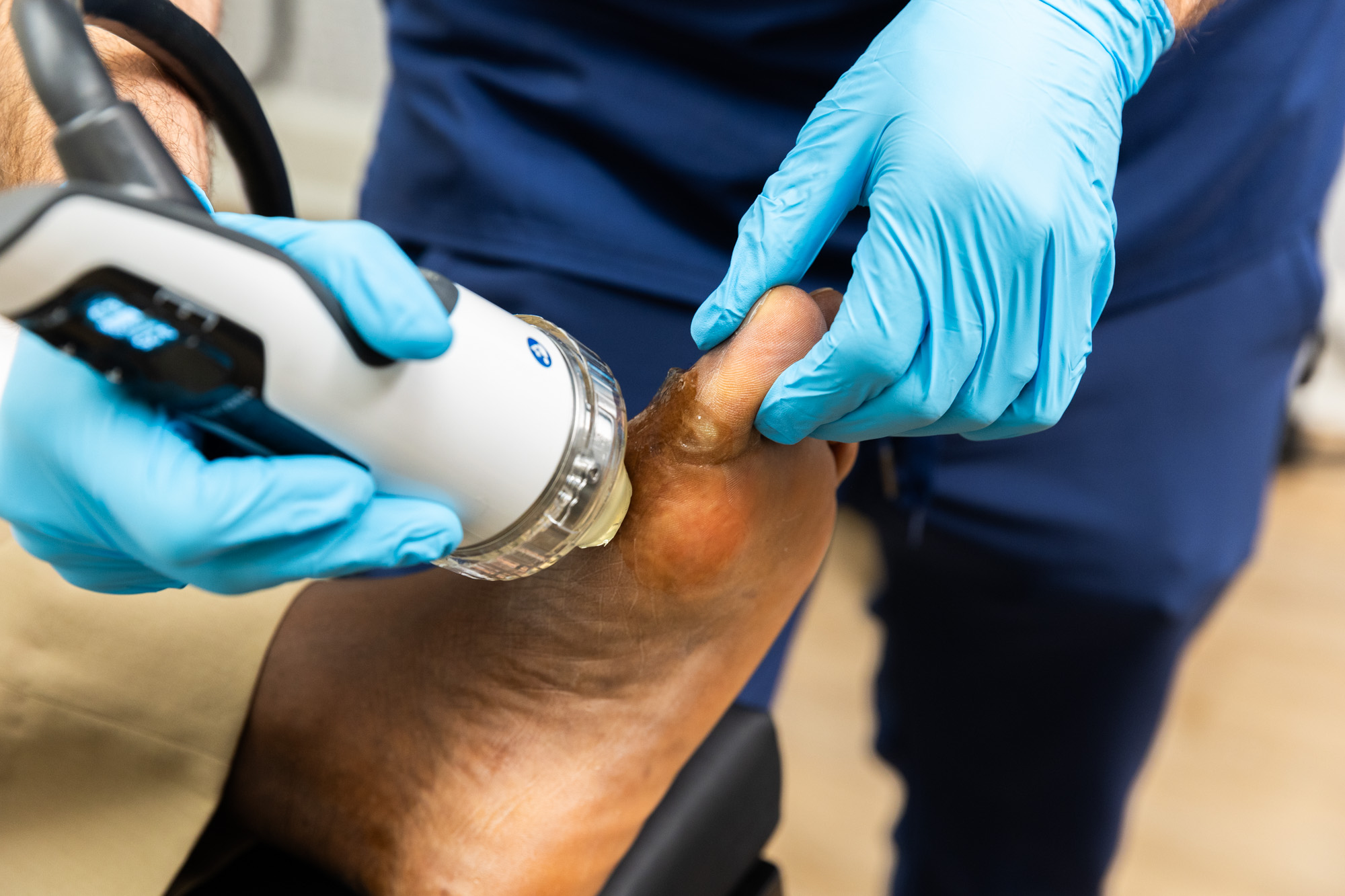
Accurate injection placement is essential for effective bursitis treatment. Our physicians perform ultrasound-guided injections using real-time imaging to ensure medication is delivered directly into the inflamed bursa rather than nearby tissues. This image-guided approach improves precision, enhances treatment effectiveness, and helps provide more consistent pain relief than landmark-guided injections.
Inflamed bursae often develop because of repetitive stress, muscle weakness, joint instability, poor biomechanics, or underlying arthritis. Simply reducing inflammation may provide temporary relief if these contributing factors are left untreated. We evaluate your movement patterns and musculoskeletal health to address the underlying cause while creating a personalized treatment plan that supports lasting recovery.
When bursitis becomes chronic or continues to return despite conservative care, additional treatment options may be appropriate. Depending on your condition, regenerative therapies such as platelet-rich plasma (PRP) may help support tissue healing and reduce persistent inflammation. Our physicians recommend evidence-based treatments tailored to your diagnosis, symptoms, and long-term recovery goals.
Subacromial Bursitis (Shoulder)
Subacromial bursitis is a common cause of shoulder pain, especially during overhead movements, lifting, or sleeping on the affected side. It often develops alongside rotator cuff irritation or shoulder impingement. We use ultrasound to confirm the diagnosis and perform precise image-guided injections when appropriate. Treatment may also include rehabilitation to improve shoulder mechanics and reduce the risk of recurring symptoms.
Trochanteric Bursitis (Hip)
Trochanteric bursitis causes pain along the outside of the hip that often worsens with walking, climbing stairs, or lying on the affected side. It is commonly associated with muscle weakness, repetitive stress, or abnormal hip mechanics. Our treatment combines ultrasound-guided injections with targeted strengthening and movement correction to relieve pain and improve long-term hip function.
Prepatellar and Infrapatellar Bursitis (Knee)
These forms of bursitis affect the front of the knee and commonly develop from repetitive kneeling, direct trauma, or overuse. Symptoms may include swelling, tenderness, and pain with kneeling or bending the knee. Treatment may include aspiration, ultrasound-guided injections, activity modification, and rehabilitation to reduce inflammation and restore normal movement.
Pes Anserine Bursitis (Inner Knee)
Pes anserine bursitis causes pain along the inner knee just below the joint and is often mistaken for arthritis. It frequently occurs in people with knee osteoarthritis, obesity, or altered walking mechanics. We accurately diagnose the condition using a comprehensive evaluation and provide targeted treatments to relieve pain while addressing contributing factors.
Olecranon Bursitis (Elbow)
Olecranon bursitis affects the fluid-filled sac over the tip of the elbow and is commonly caused by repetitive pressure, trauma, or inflammatory conditions. Symptoms include swelling, tenderness, and discomfort when leaning on the elbow. Our physicians evaluate for infection when necessary and provide personalized treatment, including aspiration or ultrasound-guided injections for non-infectious bursitis.
Iliopsoas Bursitis (Anterior Hip and Groin)
Iliopsoas bursitis causes deep pain in the front of the hip or groin, particularly during walking, climbing stairs, or hip flexion activities. It may develop from overuse, hip arthritis, or irritation of the hip flexor tendon. Using diagnostic ultrasound, we accurately identify the source of pain and provide targeted treatment to reduce inflammation and restore mobility.
Preparation Guidelines• No specific fasting or preparation is required for a bursitis consultation or injection appointment.
• Bring a complete list of all medications, supplements, and blood thinners you are currently taking. Blood thinners may require temporary adjustment before injection procedures and should be discussed with your prescribing physician prior to the appointment.
• Wear or bring comfortable, loose-fitting clothing that allows easy access to the affected area. For shoulder appointments, a loose short-sleeved shirt. For hip appointments, loose shorts or pants that can be repositioned. For knee or elbow appointments, shorts or a short-sleeved shirt respectively.
• Be prepared to describe the full character of your bursa pain: whether it is worse with specific movements or positions, whether direct pressure over the area is painful, how long the pain has been present, whether it came on gradually or after a specific event, and what treatments you have already tried.
• Notify our team if you have any signs of possible infection, including fever, skin redness, warmth, or pus near the affected area. These must be evaluated before any injection procedure is performed.
• Bring any prior imaging including X-rays, MRI, or ultrasound reports of the affected area if available.
Initial ConsultationYour first appointment is a thorough evaluation of your bursa pain. Our physicians perform a structured physical examination that includes palpation of the bursal location to identify maximal tenderness, range of motion assessment of the affected joint, strength testing of the surrounding musculature, and provocative maneuvers specific to the bursa being evaluated. Diagnostic ultrasound imaging of the affected bursa is performed at the initial visit to directly visualize the bursal sac, measure bursal fluid volume and wall thickness, assess the condition of adjacent tendons and the joint surface, and confirm that the bursa is the primary pain generator. This imaging also guides the injection procedure if treatment is indicated at the same visit. You leave the first appointment with a confirmed diagnosis, an understanding of the contributing factors, and a personalized treatment plan with clear goals and a realistic timeline.
Comfort and Preparation• The skin over the injection site is cleaned with an antiseptic solution before any procedure.
• A local anesthetic is applied to the skin at the needle entry point to minimize discomfort before the injection is placed.
• Your physician positions the ultrasound transducer to provide optimal visualization of the bursa and confirms your comfort before beginning.
Ultrasound-Guided Procedure Delivery• The ultrasound transducer provides real-time visualization of the bursa, the surrounding tendons, and the adjacent bone throughout the procedure.
• The needle is advanced under direct ultrasound visualization to the bursal sac, with position confirmed inside the bursa before aspiration or injection is performed.
• For aspiration, the physician visualizes the fluid collapsing within the bursa and confirms complete drainage of accessible fluid volume.
• For corticosteroid or PRP injection, the physician observes the spread of injectate within the bursa in real time, confirming accurate intrabursal delivery.
• The procedure takes approximately 15 to 20 minutes. Most patients tolerate it well with local anesthetic in place.
Immediate Recovery• Most patients return home the same day and resume normal light activities within 24 to 48 hours following the procedure.
• Mild soreness at the injection site is normal and typically resolves within one to two days. This soreness is distinct from the original bursa pain and should not be interpreted as treatment failure.
• Apply ice to the injection site for 15 to 20 minutes every two to three hours for the first day to manage post-procedure soreness.
• Avoid the specific activity or position that was mechanically loading the inflamed bursa for 48 to 72 hours following the injection to allow the anti-inflammatory effect to establish without mechanical disruption.
• If PRP was used, avoid anti-inflammatory medications including NSAIDs for at least one week following the injection, as these can interfere with the platelet-driven healing response.
• Contact our office if you develop fever, increasing redness or warmth at the injection site, or any signs of infection in the days following the procedure.
.avif)
Ongoing Management• Begin or resume the prescribed physical therapy and rehabilitation program as directed by your physician, typically one to two weeks following the injection as pain has reduced enough to allow effective participation.
• Attend all follow-up appointments so your physician can assess your symptom response, check the bursa on ultrasound if needed, and determine whether additional treatment or a different approach is indicated.
• Implement the biomechanical and postural corrections identified during your evaluation consistently, not just during the acute phase of treatment. Returning to the same movement patterns and postures that caused the bursitis without correction will produce recurrence.
• Patients receiving PRP therapy can expect gradual progressive improvement over six to twelve weeks. A follow-up ultrasound at six to eight weeks can confirm reduction in bursal wall thickening and guide further treatment decisions.

Diagnostic Ultrasound for an Accurate Diagnosis
Bursitis can resemble tendon injuries, arthritis, or nerve conditions, making an accurate diagnosis essential. We use diagnostic ultrasound to confirm the inflamed bursa, evaluate surrounding tissues, and identify the true source of your pain before recommending treatment.
Precision Ultrasound-Guided Injections
Our physicians perform every bursal injection under real-time ultrasound guidance to ensure medication is delivered directly into the inflamed bursa. This image-guided approach improves accuracy, enhances treatment effectiveness, and helps provide more consistent pain relief.
Treating the Cause, Not Just the Symptoms
Bursitis often develops because of repetitive stress, muscle weakness, poor biomechanics, or underlying joint conditions. In addition to reducing inflammation, we identify and address these contributing factors through personalized treatment plans designed to improve function and reduce the risk of recurring pain.
Convenient Southern California Locations
Integrative Sports & Spine provides expert bursitis treatment at our Long Beach, Alhambra, Riverside, and City of Industry locations. Our experienced physicians deliver personalized, non-surgical care using advanced diagnostics and evidence-based treatments to help you recover and return to your daily activities.


The best treatment depends on the location, severity, and cause of your bursitis. Most patients improve with activity modification, physical therapy, anti-inflammatory treatments, or ultrasound-guided corticosteroid injections. For chronic or recurrent bursitis, regenerative treatments such as PRP may also be considered. Our physicians create personalized treatment plans based on your diagnosis and recovery goals.

Yes. Most cases of bursitis respond well to non-surgical treatment, including rest, activity modification, physical therapy, medications, and ultrasound-guided injections. Surgery is rarely needed and is generally reserved for severe cases that do not improve with conservative treatment or when infection requires surgical management.

Bursitis develops when a bursa becomes irritated or inflamed from repetitive motion, overuse, direct injury, prolonged pressure, or underlying joint conditions such as arthritis. Poor movement patterns and muscle weakness can also increase stress on the bursa and contribute to ongoing inflammation.

Recovery depends on the severity of the condition and the treatment used. Mild cases may improve within a few weeks, while chronic bursitis can take several months to fully recover. Following your treatment plan and addressing the underlying cause can help promote a faster and more complete recovery.

Yes. Ultrasound-guided corticosteroid injections can effectively reduce inflammation and relieve pain by delivering medication directly into the affected bursa. For chronic or recurrent cases, PRP therapy may be recommended to support tissue healing and provide longer-lasting symptom relief.

Bursitis is inflammation of a bursa, while tendonitis affects the tendon itself. Although the conditions often occur together and produce similar symptoms, they require different treatment approaches. Our physicians use diagnostic ultrasound to identify the primary source of pain and recommend the most appropriate treatment.

You should seek medical evaluation if your pain lasts longer than a few weeks, limits daily activities, continues to worsen, or is accompanied by significant swelling, redness, warmth, or fever. Early treatment can help prevent bursitis from becoming chronic and improve recovery.

Without treatment, bursitis can become chronic, leading to persistent pain, reduced mobility, and recurring inflammation. Ongoing irritation may also place additional stress on nearby muscles, tendons, and joints. Early evaluation and treatment can help prevent long-term complications and restore normal function.
.png)
Treated for trochanteric bursitis with chronic lateral hip pain and disrupted sleep
"Lateral hip pain had been waking me up every night for almost a year. I could not lie on that side and walking more than 20 minutes made the pain intense. I had received one injection before from a different practice with only a few weeks of relief. The team here did an ultrasound on my first visit and found both the bursa and a gluteal tendon problem that the prior injection had not addressed. They injected the bursa accurately under imaging and six months later, I am sleeping through the night on either side and walking five or six miles without pain. "

Treated for subacromial bursitis with shoulder impingement limiting overhead work
"My job requires reaching and lifting overhead and the shoulder pain had become severe enough that I was falling behind at work and worried about my job. I had been told I needed surgery to fix the impingement. The physician here did an ultrasound that showed significant bursal inflammation but intact rotator cuff tendons, meaning surgery was not warranted. After one ultrasound-guided injection into the bursa and two months of targeted rotator cuff exercises, my overhead reach is pain-free and I am back to full productivity. I am very grateful I sought a second opinion before agreeing to an operation."

Treated for pes anserine bursitis coexisting with medial knee osteoarthritis
"I had been told for two years that my inner knee pain was entirely from arthritis and that there was nothing to do except wait for a knee replacement. The team here identified that I also had pes anserine bursitis contributing significantly to my pain and that the two could be treated separately. The bursal injection provided dramatic relief of the inner knee tenderness within a week, which was far more than the prior knee injections had ever achieved. With appropriate treatment now focused on both conditions, my pain is manageable and I have been able to avoid the knee replacement that was being recommended as my only option."


Bursitis that disrupts your sleep, limits your range of motion, and makes certain ordinary positions acutely painful does not have to become a chronic, recurring problem. With accurate diagnosis using point-of-care ultrasound, precisely guided injection that delivers medication into the bursa itself, and a rehabilitation program that corrects the mechanical factors that caused the inflammation, lasting relief is achievable for the large majority of patients without surgery.
Call (833) 476-7377 or click the appointment button below to schedule a consultation at any of our four Southern California pain clinic locations.
Ultrasound-guided joint injections for the shoulder, hip, and knee address the intra-articular component of joint pain that frequently coexists with bursitis, particularly in patients with underlying osteoarthritis or inflammatory arthropathy.
View MorePRP therapy is the preferred regenerative treatment for chronic bursitis with synovial thickening and for bursitis coexisting with adjacent tendon degeneration, delivering growth factors that address the underlying tissue pathology rather than simply reducing inflammation temporarily.
View MoreBursitis and tendinopathy frequently coexist at the same anatomical location. Our comprehensive tendonitis treatment program addresses the tendon degeneration that commonly sustains bursal inflammation, particularly in the shoulder, hip, and elbow.
View More