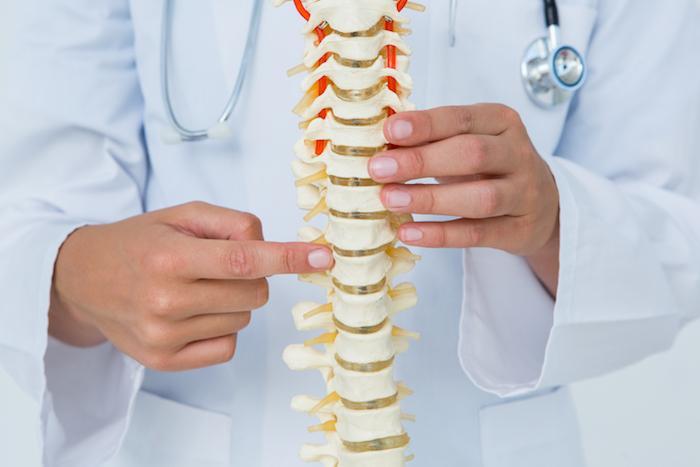
Degenerative disc disease is a common cause of chronic neck and back pain, but it does not mean you have to live with ongoing discomfort or undergo surgery. While spinal degeneration cannot be reversed, many patients achieve significant pain relief and improved function through targeted, non-surgical treatment. At Integrative Sports & Spine, our physicians create personalized treatment plans designed to reduce pain, restore mobility, and support long-term spine health.
.avif)
Treatment Time
Most injection-based DDD sessions are typically completed within a 2-to-3-hour visit depending on the treatment plan.
.avif)
Recovery Time
Minimal downtime. Most patients return to normal activities within 1-3 days.
.avif)
Locations Available
Available at all ISS clinics - Long Beach, Alhambra, Riverside, and City of Industry.
Spinal discs are the shock-absorbing cushions between the vertebrae that support movement and help distribute forces throughout the spine. Over time, these discs naturally lose water content, become less flexible, and may develop small tears, causing a reduction in disc height and increased stress on nearby joints and tissues.
Degenerative disc disease occurs when these age-related changes become significant enough to cause pain, stiffness, reduced mobility, or nerve irritation. It most commonly affects the neck and lower back, where spinal movement and loading are greatest. Because symptoms may arise from the disc itself, nearby facet joints, or compressed nerves, an accurate diagnosis is essential to identify the true source of pain and develop an effective treatment plan.
At Integrative Sports & Spine, we approach degenerative disc disease with a systematic evaluation that combines physical examination, neurological assessment, and careful imaging review to identify every structure contributing to a patient's pain. Treatment plans are built around those specific findings rather than a blanket response to an MRI report. Depending on each patient's presentation, care may include epidural steroid injections for disc-related nerve involvement, facet joint injections or medial branch blocks for secondary facet pain, regenerative therapies to support disc tissue health, and a structured rehabilitation program targeting spinal stability, postural correction, and load redistribution. Every plan is matched to the patient's diagnosis, goals, and functional priorities.

Degenerative disc disease rarely causes pain through the disc alone. Secondary facet joint degeneration, nerve root involvement, and muscular dysfunction all contribute to the clinical picture. Our thorough diagnostic approach ensures that treatment addresses every structure generating your symptoms rather than focusing narrowly on a single finding seen on imaging.
The majority of patients with degenerative disc disease do not require surgery to achieve meaningful pain reduction and improved function. Image-guided injections, regenerative therapies, and structured rehabilitation programs deliver lasting relief by targeting the specific pain generators and the biomechanical patterns that perpetuate them.
Chronic disc-related pain often leads patients to restrict their movement out of fear of worsening their condition, which in turn weakens the spinal muscles that are most important for protecting degenerating segments. Our rehabilitation programs break this cycle by progressively restoring spinal mobility, building deep stabilizing strength, and teaching movement patterns that protect the spine without limiting activity.
Treating a degenerative spine is not just about addressing today's pain. It is about slowing the progression of degeneration, reducing the risk of future flare-ups, and building a foundation of muscular support and movement quality that keeps the spine functioning as well as possible over the long term. Every treatment plan we develop includes this forward-looking component.
Cervical Degenerative Disc Disease
Degeneration of the cervical discs can cause chronic neck pain, stiffness, headaches, and referred pain into the shoulders or arms. Treatment may include cervical epidural injections, facet procedures, and rehabilitation.
Lumbar Degenerative Disc Disease
Lumbar disc degeneration commonly causes low back pain, stiffness, and discomfort with prolonged sitting or standing. When nerves become involved, symptoms may extend into the legs.
Disc Degeneration with Secondary Facet Arthropathy
Loss of disc height increases stress on nearby facet joints, leading to arthritis and additional pain. Treatment often combines disc-focused therapies with facet joint interventions.
Degenerative Disc Disease with Radiculopathy
Degenerated discs and bone spurs can compress nearby nerve roots, causing pain, numbness, or tingling that travels into the arms or legs. Epidural injections and nerve-targeted treatments help reduce symptoms.
Multi-Level Disc Degeneration
Degeneration affecting multiple spinal levels can create complex pain patterns. We identify the primary pain generators and develop a focused treatment strategy based on your symptoms rather than imaging findings alone.
Post-Surgical Disc Degeneration and Adjacent Segment Disease
Patients who have undergone prior spinal surgery may develop accelerated degeneration at nearby spinal levels. Our physicians provide targeted treatment to address new pain and restore function.
Degenerative Disc Disease with Spinal Stenosis
Disc degeneration can contribute to narrowing of the spinal canal, placing pressure on nerves and causing pain, weakness, numbness, or difficulty walking. Treatment focuses on reducing inflammation and improving mobility.
Annular Tears and Discogenic Pain
Small tears in the outer layer of a spinal disc can produce significant neck or back pain even without a large disc herniation. Our treatment plans target inflammation, improve spinal stability, and help patients return to normal activities.
Preparation Guidelines• Bring any existing MRI, CT, or X-ray imaging of the spine. Imaging review is a central part of the initial consultation, and having prior studies available accelerates the diagnostic process significantly.
• Bring a complete list of all medications, supplements, and blood thinners you are currently taking.
• Notify our team of any known allergies, particularly to contrast dye, local anesthetics, or corticosteroids.
• Wear comfortable clothing that allows easy access to the neck or lower back depending on the area being evaluated.
• Be prepared to describe your pain in specific terms: where it is, what it feels like, what makes it worse or better, whether it radiates, and how it has changed over time.
• Arrange transportation home if sedation or a nerve block is part of your procedure.
Initial ConsultationYour first appointment is a comprehensive physician evaluation. Our doctors review your full spinal history, including prior imaging, prior treatments, and the specific impact your symptoms have on your work, sleep, and daily activities. A thorough physical and neurological examination identifies the structures most likely generating your pain. All imaging is reviewed in detail, with emphasis on correlating imaging findings to clinical symptoms rather than treating every abnormality seen on an MRI. You leave with a clear diagnosis, a layered treatment plan, and a realistic picture of what to expect.
Comfort and Preparation• The treatment area is cleaned and numbed with a local anesthetic before any injection procedure begins.
• Your physician confirms your comfort and readiness before proceeding.
Targeted Treatment• All spinal injection procedures including epidural steroid injections, facet joint injections, and nerve root blocks are performed under real-time fluoroscopic guidance to ensure precise delivery to the target structure.
• Contrast dye confirms accurate needle position before the therapeutic medication is administered.
• Procedures typically take 20 to 30 minutes. A brief monitoring period follows before you are cleared to leave.
Immediate Recovery• Most patients return home the same day shortly after their procedure.
• Mild soreness at the injection site is normal and typically resolves within 24 to 48 hours.
• Apply ice to the treated area for 15 to 20 minutes every two to three hours to manage post-procedure discomfort.
• Temporary increased pain in the first day or two after a corticosteroid injection before relief sets in is a recognized and normal response.
.avif)
First 72 Hours• Avoid strenuous activity, heavy lifting, and prolonged positions that aggravate your spinal symptoms.
• Keep the injection site clean and dry.
• Take medications only as prescribed by your physician.
• Contact our office promptly if you experience fever, new neurological symptoms such as leg or arm weakness, or escalating pain following a procedure.

Long-Term Recovery• Begin prescribed physical therapy as directed. Spinal stabilization exercises, postural correction, and progressive strengthening are foundational to sustaining the benefits of any interventional procedure and reducing the risk of flare-ups.
• Attend all follow-up appointments so your physician can monitor your progress and adjust your care plan as the clinical picture evolves.
• Patients receiving regenerative procedures such as PRP experience progressive improvement over two to three months as tissue-level healing advances.
• Long-term spine health in the setting of degenerative disc disease requires ongoing attention to body mechanics, ergonomics, activity habits, and exercise. Our physicians and therapists provide the tools and guidance to make these sustainable.

Spine-Specialized Physicians
Degenerative disc disease involves a complex interaction between disc changes, secondary joint degeneration, potential nerve involvement, and the muscular compensations that develop in response to chronic pain. Our physicians have specialized training in diagnosing and treating this full spectrum of spinal pathology, not just the disc finding on an imaging report.
Image-Guided Precision for Every Procedure
Accurate needle placement is essential for both safety and effectiveness in spinal injection procedures. We use real-time fluoroscopic guidance for all epidural steroid injections, facet joint procedures, and nerve root blocks, ensuring that every procedure reaches the intended target with the precision that the cervical and lumbar spine demands.
Comprehensive Non-Surgical Treatment Arsenal
Our clinic offers the full range of non-surgical treatments for degenerative disc disease: epidural steroid injections, facet joint injections, medial branch blocks, radiofrequency ablation, regenerative PRP therapy, and integrated physical rehabilitation. Patients receive the right treatment at each stage of their care rather than a limited menu of options.
Rehabilitation That Protects the Degenerating Spine
Injections address pain and inflammation. Rehabilitation addresses the biomechanical drivers that perpetuate symptoms and accelerate degeneration. We combine these elements because neither alone produces outcomes as durable as both together. Every patient receives a physical therapy program specifically designed to strengthen the muscles that protect their specific degenerated segments and improve the movement patterns that reduce cumulative spinal loading.


Despite its name, degenerative disc disease is not a disease in the traditional sense. It is a term used to describe the natural aging process of spinal discs as they lose hydration, structural integrity, and height over time. The term is somewhat misleading because disc degeneration occurs in virtually everyone as they age. What varies between individuals is how quickly degeneration progresses, whether it produces significant pain, and how much it affects daily function.

The structural changes associated with disc degeneration, including disc height loss, annular tears, and dehydration of the nucleus, cannot be reversed with currently available treatments. However, the pain and functional limitations these changes produce can be managed very effectively without surgery in the majority of patients. Regenerative therapies such as PRP may support disc tissue health and slow progression, though they do not restore a degenerated disc to its original state. The goal of treatment is meaningful symptom relief, restored function, and slowing further degeneration rather than structural reversal.

Many conditions cause chronic back and neck pain, including facet joint arthritis, muscle injury, spinal stenosis, and nerve root compression. Degenerative disc disease is often identified on MRI, but imaging findings alone do not confirm the disc as the source of pain. Clinical evaluation including a detailed history, physical examination, and sometimes diagnostic injection procedures is needed to correlate imaging findings with actual pain generators. Our physicians specialize in this diagnostic process.

The vast majority of patients with degenerative disc disease do not require surgery. Surgery is typically reserved for patients with a serious neurological deficit such as progressive weakness, loss of bladder or bowel function, or when thorough non-surgical treatment has failed to provide adequate relief over an extended period. Most patients achieve meaningful pain reduction and improved function through targeted injections, regenerative therapies, and structured rehabilitation without ever needing a surgical procedure.

A herniated disc occurs when the soft inner nucleus of a disc pushes through a tear in the outer annulus and presses against adjacent nerve structures. Disc herniation can happen independently or as a consequence of underlying degenerative changes. Degenerative disc disease refers to the broader degenerative process affecting disc structure and height. Both conditions can cause nerve root compression and similar symptoms, and both can be treated effectively with the same range of non-surgical interventions.

Most patients with degenerative disc disease can expect a meaningful reduction in pain intensity, improved ability to sit and stand comfortably, better sleep quality, and greater capacity for work and physical activity. Patients who engage consistently with both the interventional and rehabilitative components of their care typically achieve more durable outcomes. The degree of improvement depends on factors including the severity of degeneration, the number of spinal levels involved, the presence of nerve compression, and how long symptoms have been present.
.png)
Treated for multi-level lumbar degenerative disc disease with chronic low back pain
"I had been told by multiple providers that my back was just worn out from years of physical work and that I would have to manage. The team here saw it differently. They identified that only two of the four degenerated levels on my MRI were actually generating my pain, treated those specifically, and put me through a stabilization program that has changed the way I move. My pain is at a fraction of what it was and I am back to doing the physical activities I thought were behind me."

Treated for cervical degenerative disc disease with neck pain and arm symptoms
"Years of desk work had taken a toll on my neck, and by the time I came here my arm tingling and neck stiffness were affecting my ability to do my job. The physician explained exactly which disc levels were involved and why, treated the inflammation around the affected nerves, and set me up with a cervical stabilization program. Within two months my arm symptoms had largely resolved and my neck mobility is better than it has been in years. I finally understand what is happening in my spine and how to protect it going forward."

Treated for lumbar disc degeneration with secondary facet arthropathy
"I had a combination of disc degeneration and facet joint arthritis in my lower back that two previous providers had treated as one thing. Here they identified both problems and treated each one directly with different procedures. The difference in my daily pain level after the combined treatment program was dramatic. I also learned through the physical therapy component why my back was loaded the way it was and how to change that. This clinic changed my relationship with my spine entirely."


A diagnosis of degenerative disc disease does not have to mean a lifetime of chronic pain and progressively shrinking activity. With accurate diagnosis, targeted interventional treatment, and a rehabilitation program designed to protect your spine for the long term, the majority of patients achieve meaningful relief and return to the activities and quality of life that disc degeneration has been taking from them.
Call (833) 476-7377 or click the appointment button below to schedule a consultation at any of our four Southern California pain clinic locations.
The primary interventional treatment for disc-related nerve root inflammation, delivering anti-inflammatory medication to the epidural space surrounding affected nerve structures at the degenerated disc level.
View MoreComprehensive neuropathy treatment focuses on reducing nerve inflammation, improving nerve function, and managing symptoms such as pain, numbness, tingling, and balance difficulties. By combining targeted interventions, rehabilitation, and individualized care plans, we help patients improve function, maintain independence, and achieve long-term symptom relief.
View MoreRegenerative PRP therapy uses the patient's own concentrated healing factors to support disc and soft tissue health at degenerated spinal segments. PRP may slow the progression of degeneration and reduce the inflammatory environment within and around affected discs.
View More