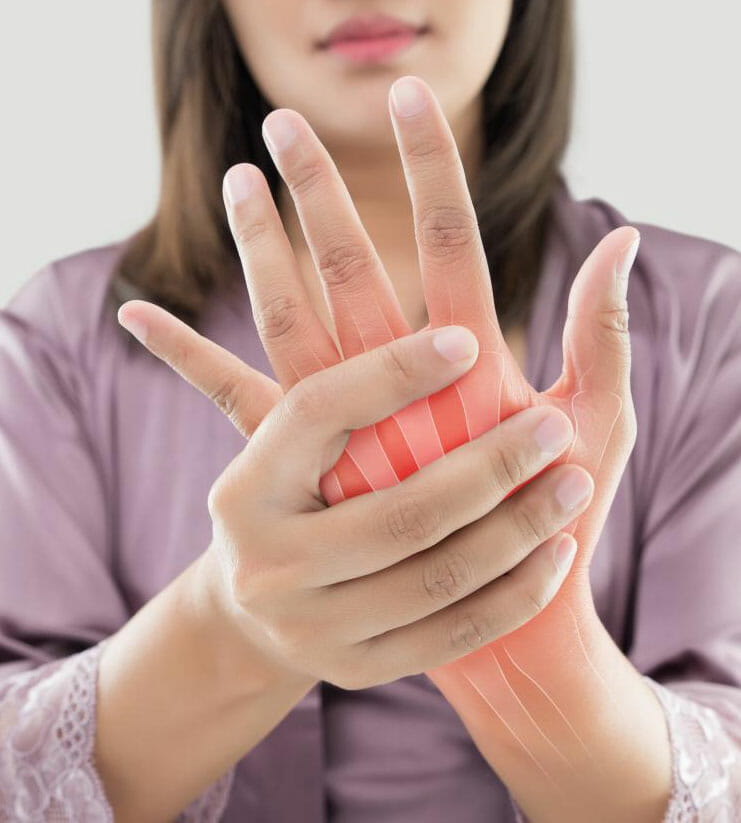
Pinched Nerve Treatment in Southern California

A pinched nerve can cause sharp, radiating pain, numbness, tingling, or weakness that interferes with everyday activities and typically does not improve without treating the underlying cause. At Integrative Sports & Spine, we accurately identify the source of nerve compression and develop personalized, non-surgical treatment plans to relieve pressure, reduce symptoms, and restore function.

Quick Overview

Icon representing estimated treatment duration for pain procedures

15-30 Mins

Treatment Time

Most pinched nerve treatments are completed within 30 minutes with minimal disruption.

Recovery icon symbolizing average healing time after pain treatment

24-72 Hrs

Recovery Time

Most patients return to light daily activities within 24 to 72 hours following treatment.

Location pin icon showing availability of pain treatments at all four Southern California clinics: Riverside, Alhambra, Long Beach, and City of Industry

All Clinics

Locations Available

Pinched Nerve Treatment is available at our Southern California clinics - Long Beach, Alhambra, Riverside, and City of Industry.

Understanding Pinched Nerves and How We Treat Them

A pinched nerve occurs when surrounding structures such as a herniated disc, bone spur, thickened ligament, or inflamed tissue place excessive pressure on a nerve. This compression disrupts normal nerve signaling, leading to symptoms like sharp or burning pain, tingling, numbness, and muscle weakness. The location of these symptoms depends on which nerve is affected, whether in the neck, lower back, or a peripheral area such as the wrist, elbow, buttock, or ankle.

Because many conditions can cause nerve compression, an accurate diagnosis is essential before treatment begins. At Integrative Sports & Spine, our physicians identify the exact source of compression through a comprehensive evaluation that may include a physical examination, imaging, and electrodiagnostic testing when needed. This precise approach allows us to recommend targeted treatments that address the underlying cause rather than simply managing the symptoms.

At Integrative Sports & Spine, our approach to pinched nerve treatment begins with confirming the diagnosis. We identify the specific nerve involved, the anatomical location of compression, and the structure causing it through a combination of clinical examination, MRI and CT review, and electrodiagnostic studies where appropriate. Treatment plans are then tailored to the location, cause, and severity of each patient's nerve compression and may include targeted epidural steroid injections, selective nerve root blocks, transforaminal injections, peripheral nerve hydrodissection, physical therapy focused on nerve mobilization and postural decompression, and regenerative procedures to support nerve healing. Every intervention is designed to relieve pressure on the affected nerve and address the underlying structural cause.

Epidural steroid injection procedure being performed on a patient’s spine.

Benefits of Pinched Nerve Treatment

Diagnosis That Matches Treatment to the Right Location

The single most important step in pinched nerve care is confirming exactly which nerve is compressed and where. Our physicians use systematic clinical examination and imaging review to map each patient's symptoms to the specific nerve root level or peripheral entrapment site responsible. This diagnostic precision ensures that every procedure is directed at the structure actually causing the problem.

Targeted Procedures That Relieve Nerve Pressure Directly

Image-guided injection procedures deliver anti-inflammatory medication precisely to the space surrounding a compressed nerve root, reducing the swelling and chemical irritation that amplify nerve pain and dysfunction. This targeted approach provides a level of nerve-specific relief that oral medications cannot match and creates the physiological conditions the nerve needs to recover.

Nerve-Specific Rehabilitation to Prevent Recurrence

Decompressing a nerve through an injection addresses the current inflammatory and chemical environment. Preventing re-compression requires addressing the mechanical and postural factors that created the compression in the first place. Our physical therapy programs for pinched nerve patients incorporate nerve mobilization techniques, spinal stabilization, postural correction, and ergonomic guidance that protect the nerve from repeated injury over the long term.

A Non-Surgical Path for Most Patients

The vast majority of pinched nerve cases do not require surgery. With accurate diagnosis, targeted injections, and a structured rehabilitation program, most patients achieve lasting relief and full restoration of nerve function without ever entering an operating room. Our physicians are experts at identifying which patients are candidates for non-surgical care and delivering that care with the precision and consistency it requires.

Conditions We Treat Associated With Pinched Nerve

Cervical Pinched Nerve
A pinched nerve in the neck can cause pain, numbness, tingling, or weakness that radiates into the shoulder, arm, or hand. We use targeted, image-guided treatments to reduce nerve inflammation and help restore comfort and function.

Lumbar Pinched Nerve Lumbar nerve compression commonly causes sciatica, with pain, tingling, or numbness traveling from the lower back into the leg. Personalized treatment focuses on relieving nerve pressure, reducing inflammation, and improving mobility.

Herniated Disc with Nerve Compression
‍A herniated disc can press on nearby nerves, causing radiating pain, numbness, or weakness. Our targeted treatments address inflammation and nerve irritation while supporting long-term recovery.

Spinal Stenosis with Nerve Compression
Spinal stenosis narrows the spaces around the spinal nerves, often causing leg pain, numbness, or difficulty walking. Treatment is designed to reduce nerve irritation and improve daily function.

Piriformis Syndrome
A tight or inflamed piriformis muscle can compress the sciatic nerve and mimic lower back-related sciatica. We identify the source of compression and provide targeted treatments to relieve symptoms and improve mobility.

Cubital Tunnel Syndrome Compression of the ulnar nerve at the elbow can cause tingling in the ring and little fingers, along with grip weakness. Treatment focuses on relieving nerve pressure, reducing symptoms, and restoring function.

Carpal Tunnel Syndrome
Carpal tunnel syndrome occurs when the median nerve is compressed at the wrist, leading to numbness, tingling, and hand weakness. Conservative treatments help reduce nerve irritation and improve hand function.

Shoulder Region Nerve Compression
Nerves traveling through the shoulder and collarbone region can become compressed, causing pain, numbness, or weakness in the arm and hand. We evaluate the underlying cause and provide targeted treatment to improve comfort and mobility.

What to Expect During Your Appointment

Before Your Treatment

Preparation Guidelines• Bring any existing MRI, CT, or nerve conduction study results. Imaging review is central to confirming the location and cause of nerve compression before any procedure is recommended.
• Bring a complete list of all medications, supplements, and blood thinners you are currently taking.
• Notify our team of any known allergies, particularly to contrast dye, local anesthetics, or corticosteroids.
• Wear comfortable, loose-fitting clothing that allows access to the neck, lower back, or the specific extremity being evaluated and treated.
• Be prepared to describe the full pattern of your symptoms: where they started, where they travel, what makes them better or worse, and whether you have noticed any weakness or coordination changes.
• Arrange transportation home if sedation or a nerve block affecting limb strength or sensation is planned for your appointment.

Initial ConsultationYour first appointment is a comprehensive diagnostic evaluation. Our physicians conduct a detailed neurological examination that assesses the distribution of your symptoms, maps your sensory deficits, tests muscle strength in the affected limb, and evaluates reflexes to identify the nerve root or peripheral nerve most likely responsible. All available imaging is reviewed in detail, with emphasis on correlating the imaging findings to your clinical pattern. Where the diagnosis remains uncertain, electrodiagnostic testing such as nerve conduction studies and EMG can be ordered to objectively confirm the location and degree of nerve compression. You leave with a clear diagnosis and a treatment plan that explains each recommended step.

During the Procedure

Comfort and Preparation• The treatment area is thoroughly cleaned and numbed with a local anesthetic before any injection procedure begins.
• Your physician confirms your comfort and readiness before proceeding.

Precision Treatment Delivery•  All spinal injection procedures including epidural steroid injections and transforaminal nerve root blocks are performed under real-time fluoroscopic guidance to ensure accurate needle placement at the specific nerve level targeted.
•  Peripheral nerve procedures such as hydrodissection are performed under ultrasound guidance to visualize the nerve and surrounding structures in real time.
•  Contrast dye is used with fluoroscopy to confirm accurate needle position at the spinal level before medication is delivered.
•  Most procedures take 20 to 30 minutes. A brief monitoring period follows before you are cleared to go home.

After Your Treatment

Immediate Recovery• Most patients return home the same day, shortly after the procedure.
• Mild soreness at the injection site is normal and typically resolves within 24 to 48 hours.
• Temporary numbness or heaviness in the treated limb following a nerve block is expected and resolves within a few hours.
• Apply ice to the injection area for 15 to 20 minutes every two to three hours to manage any post-procedure soreness.
• Avoid driving on procedure days when limb numbness or sedation was part of the treatment.

Patient applying ice pack after pain treatment as part of immediate recovery protocol

First 48 Hours
• Avoid strenuous physical activity, heavy lifting, and positions that significantly load the treated nerve pathway.
• Keep the injection site clean and dry.
• Contact our office promptly if you notice new or worsening weakness, escalating pain, fever, or any neurological change following a procedure.

Patient resting at home during the first 72 hours after a pain management procedure

Long-Term Recovery
• Begin prescribed physical therapy as directed. Nerve mobilization exercises, postural correction, and progressive strengthening of muscles protecting the compressed nerve's pathway are essential for sustained recovery.
• Attend all follow-up appointments so your physician can track nerve function recovery, assess procedure response, and adjust the plan as your condition evolves.
• Nerve healing takes time. Patients often notice improvement in pain before full sensory recovery occurs, and strength recovery may take the longest to complete. Consistency with both the interventional and rehabilitative components of care is the most important predictor of a full recovery.
• Ergonomic adjustments, sleeping position modifications, and activity habits that protect the nerve's anatomical pathway from repeated compression are essential for preventing recurrence.

Patient attending follow-up recovery session at a Southern California pain clinic for long-term pain relief

Why Choose Integrative Sports & Spine?

Precise Localization Before Any ProcedurA pinched nerve treated at the wrong level or the wrong location will not improve. Our physicians are rigorous diagnosticians who insist on correlating clinical symptoms, physical examination, and imaging findings to confirm the exact location and cause of nerve compression before recommending any intervention. This precision produces better outcomes and avoids unnecessary procedures.

Image-Guided InjectionsDelivering medication to a specific nerve root or peripheral nerve requires real-time imaging guidance. We perform all spinal injection procedures under fluoroscopic guidance and all peripheral nerve procedures under ultrasound guidance, ensuring that every injection reaches the intended anatomical target with the accuracy that effective nerve decompression requires.

Conservative Care First, Procedures When IndicatedOur physicians do not rush to injections when conservative measures have not yet been tried or when they remain appropriate. We sequence treatment logically, starting with the least invasive effective approach and escalating to interventional procedures when conservative care has been maximized or when the severity of nerve compression warrants more immediate relief. This approach ensures that patients receive what they need at each stage of their recovery.

Advanced pain management equipment used by specialists at our Southern California clinics in Riverside, Alhambra, Long Beach, and City of Industry

Frequently Asked Questions

What is the best treatment for a pinched nerve?
FAQ Header Icon

The best treatment depends on the location and cause of the nerve compression. For spinal nerve root compression from a herniated disc or bone spur, targeted epidural steroid injections combined with physical therapy are the most effective non-surgical approach and resolve the majority of cases without surgery. For peripheral nerve entrapment conditions such as carpal tunnel or cubital tunnel syndrome, nerve block injections, hydrodissection, and activity modification produce excellent results. In all cases, accurate diagnosis of the specific nerve and cause of compression is the prerequisite for selecting the right treatment.

Can a pinched nerve heal without surgery?
FAQ Header Icon

Yes, the majority of pinched nerves heal without surgery. Studies consistently show that most cases of cervical and lumbar nerve root compression from herniated discs and bone spurs respond well to non-surgical treatment including targeted injections and physical therapy. Even in cases where disc herniation has caused significant nerve compression, the disc material often shrinks over time as the body reabsorbs it, and the nerve recovers without surgical intervention. Surgery is reserved for patients who have serious neurological deficits such as progressive weakness or loss of bladder and bowel control, or who have not achieved adequate relief after a thorough course of non-surgical care.

How do I know if I have a pinched nerve?
FAQ Header Icon

The hallmark of a pinched nerve is pain, tingling, or numbness that follows a specific pathway rather than staying localized to one spot. A pinched nerve in the neck typically sends symptoms down the arm into specific fingers. A pinched nerve in the lower back sends symptoms down the leg, often following the sciatic nerve distribution through the buttock, thigh, and calf. Muscle weakness in the territory of the affected nerve and reduced or absent reflexes may also be present. A clinical examination by a physician experienced in nerve conditions, combined with appropriate imaging and sometimes electrodiagnostic testing, confirms the diagnosis.

What causes a pinched nerve?
FAQ Header Icon

Pinched nerves can result from herniated or bulging discs that press into adjacent nerve root canals, bone spurs that develop as part of spinal degeneration and narrow nerve exit channels, thickened ligaments that reduce the space available for a nerve to pass, repetitive motions or sustained positions that compress nerves at peripheral entrapment sites, direct trauma or injury that swells surrounding tissue around a nerve, and tumors or cysts in rare cases. The specific cause determines both the location of compression and the treatment approach most likely to resolve it.

How long does it take for a pinched nerve to heal?
FAQ Header Icon

The healing timeline depends on the severity and duration of the compression. Mild nerve compression that is treated promptly, before significant axonal damage occurs, often improves noticeably within four to six weeks of appropriate treatment. Moderate compression may take three to six months for full recovery. Severe or long-standing compression where axonal damage has accumulated may take six to twelve months for maximal nerve recovery, and some residual deficit may persist in very chronic cases. Pain relief and sensory improvement typically precede full strength recovery as nerves regenerate.

When should I see a doctor for a pinched nerve?
FAQ Header Icon

Seek specialist evaluation when nerve symptoms including pain, tingling, numbness, or weakness have been present for more than two to three weeks without improvement, are significantly interfering with work or daily activities, are worsening rather than improving, or are accompanied by any of the red flag symptoms described above including progressive weakness or changes in bladder or bowel function. Early evaluation and treatment consistently produces better outcomes than waiting until symptoms are severe and longstanding.

Logos of major insurance providers accepted at our pain management clinics

Insurance Coverage

At Integrative Sports & Spine, we work with most major insurance providers to ensure that specialized pinched nerve care is accessible without unnecessary financial barriers. Our insurance specialists verify your coverage before your first appointment and provide a clear, upfront explanation of your benefits and any out-of-pocket costs before treatment begins.
We Accept
• Medicare
• PPO Plans
• Personal Injury
• Self-Pay Options Available
• Most Major Insurance Carriers
Financial Policy
• Insurance verification completed prior to appointment
• Co-payments and deductibles due at time of service
• Self-pay options available with transparent pricing
• Flexible payment plans for eligible treatments

Our Patients Love Us

Derek M., 46

Treated for cervical pinched nerve

"I woke up one morning with shooting pain from my neck all the way down to my fingers and I could not grip anything properly. I was terrified I would need surgery. The team here confirmed which disc level was causing the problem with a thorough examination and MRI review, performed a targeted nerve root injection, and started me in a cervical stabilization program. The arm pain resolved almost completely within two weeks and my hand strength returned over the next month. I never needed surgery. I cannot overstate how much this practice changed my outcome."

Five out of five star rating icon representing the highest possible satisfaction score
Anita P., 52

Treated for lumbar pinched nerve

"The pain running from my low back into my leg was so bad I could not drive, sit through a meal, or sleep on my side. I had been dealing with it for three months before I came here. The physician identified the exact disc level involved and performed two transforaminal injections spaced three weeks apart. The sciatica dropped to almost nothing by the end of the second treatment. The physical therapy program they designed kept me stable afterward. A year later I am still doing well and have not needed any further injections."

Five out of five star rating icon representing the highest possible satisfaction score
James W., 39

Treated for carpal tunnel syndrome

"My hands were waking me up three or four times a night with numbness and tingling and my grip was noticeably weaker. I had been told the next step was surgery. The physician here recommended a carpal tunnel injection series first, and the relief from the first injection was immediate. After two injections and some adjustments to how I set up my workstation, my symptoms have been well controlled for eight months. Surgery is still an option if things change, but right now I do not need it and I am grateful for that."

Five out of five star rating icon representing the highest possible satisfaction score
Five out of five star rating shown from patient reviews, reflecting consistently excellent satisfaction and positive outcomes

Ready to Find Relief From Your Pinched Nerve?

A pinched nerve does not have to mean surgery, chronic pain, or permanent nerve damage. With accurate diagnosis, targeted interventional treatment, and a rehabilitation program designed to protect the nerve from re-compression, the majority of patients achieve complete or near-complete relief and a full return to the activities that a compressed nerve has been limiting.

Call (833) 476-7377 or click the appointment button below to schedule a consultation at any of our four Southern California pain clinic locations.

Book an Appointment

Related Services

Epidural Steroid Injections

The primary interventional treatment for spinal nerve root compression, delivering anti-inflammatory corticosteroid medication to the epidural space surrounding the compressed nerve root for targeted, lasting relief.

View More
Platelet-Rich Plasma (PRP) Therapy

Regenerative PRP therapy supports median nerve healing and reduces perineural inflammation in patients with chronic carpal tunnel syndrome or those who have not responded fully to standard corticosteroid injections. PRP hydrodissection is an advanced treatment option that combines nerve mobilization with biological regenerative support.

View More
Radiculopathy Treatment

When a pinched spinal nerve root has produced established radiculopathy with radiating arm or leg symptoms, our dedicated radiculopathy treatment program provides the complete range of spinal injection procedures and nerve-specific rehabilitation needed for comprehensive recovery.

View More
Location icon encouraging patients to contact our pain management clinics for more information
Contact Us

(833) 476-7377

Clock icon displaying clinic hours for all Southern California pain management locations
Open Hours

Mon - Fri: 9:00am to 5:00pm