```

Meniscus Tear Treatment in Southern California

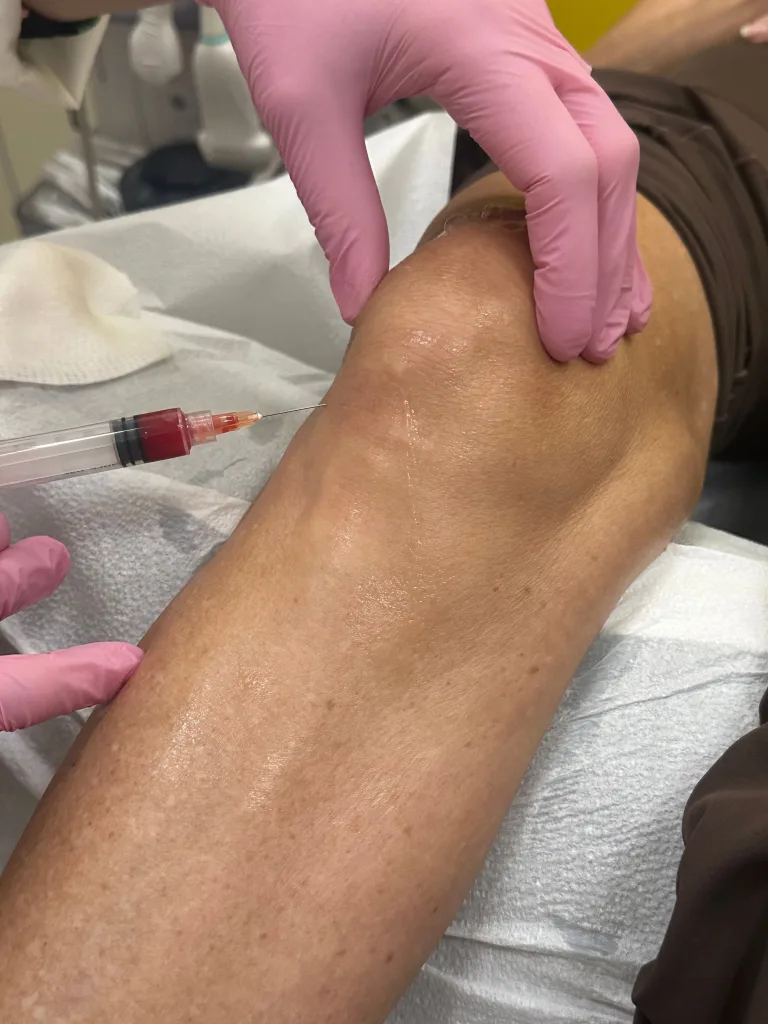
A meniscus tear can occur suddenly from a twisting injury or develop gradually as the cartilage weakens with age, causing pain, swelling, clicking, or catching. Because traumatic and degenerative tears differ in both structure and treatment, accurate diagnosis of the tear pattern is essential. At Integrative Sports & Spine, our physicians use physical examination and MRI review, along with ultrasound-guided injections and structured rehabilitation, to create a treatment plan based on the tear and your goals.

Quick Overview

Icon representing estimated treatment duration for pain procedures

15-20 Mins

Procedure Time

Miniscus Tear Treatment  procedures are completed quickly in a single visit with minimal disruption to your schedule.

Recovery icon symbolizing average healing time after pain treatment

24-48 Hrs

Recovery Time

Most patients resume normal daily activities within 24 to 48 hours following a bursa injection procedure.

Location pin icon showing availability of pain treatments at all four Southern California clinics: Riverside, Alhambra, Long Beach, and City of Industry

All Clinics

Locations Available

Miniscus Tear Treatment is available at our Southern California clinics - Long Beach, Alhambra, Riverside, and City of Industry.

When to Seek Prompt Evaluation for Knee Pain

Most meniscus tears can be evaluated through a scheduled specialist appointment, and many, particularly degenerative tears in older patients, are managed successfully without surgery. However, certain presentations suggest a more urgent problem or a tear pattern that benefits from earlier evaluation, since identifying a true mechanical lock or a coexisting ligament injury early changes both the treatment plan and the timeline for referral.

Seek Immediate Medical Evaluation If You Notice:

  •  A knee that is truly locked and cannot be fully straightened or bent, which suggests a displaced bucket-handle tear physically blocking joint motion rather than pain-related stiffness alone.
  • A large, rapidly developing effusion within hours of a twisting or pivoting injury, which can indicate a coexisting ACL tear or fracture rather than an isolated meniscus injury.
  •   A sensation of the knee repeatedly giving way or buckling, rather than simply catching, which may point toward ligament instability contributing to the mechanical symptoms.
  •  Fever, warmth, redness, or significant swelling at the knee joint without a clear injury, which can indicate a joint infection requiring urgent evaluation rather than routine meniscus care.
  • Inability to bear any weight on the leg following an acute injury, which raises concern for a fracture that needs to be excluded before a meniscus tear is assumed to be the primary problem.
  • Numbness, tingling, or a cold, pale lower leg following a significant knee injury, which may suggest a vascular or nerve injury requiring emergency evaluation.

Benefits of Specialized Frozen Shoulder Treatment

Accurate Tear Assessment

Meniscus tears are frequently treated with the same generic advice regardless of whether the tear is a stable degenerative pattern or an unstable traumatic tear at risk of locking the knee, even though the appropriate treatment differs meaningfully between them. Our physicians review imaging and perform a structured examination at the initial visit to characterize the tear pattern, location, and stability before building a treatment plan.

Precision Knee Injections

An intra-articular injection placed even slightly outside the true joint space delivers medication to surrounding soft tissue rather than to the inflamed joint itself, reducing its effectiveness. Our physicians perform every meniscus-related knee injection under direct real-time ultrasound visualization, confirming needle placement within the joint before medication is delivered.

Viscosupplementation for Degenerative Tears

For degenerative tears occurring in a knee with coexisting cartilage wear, viscosupplementation with hyaluronic acid can supplement the joint's natural lubrication and cushioning, addressing the broader joint environment rather than the tear in isolation.

Tear-Specific Rehabilitation

Aggressive loading of a knee with an unstable, locking tear risks worsening the mechanical block, while overly cautious avoidance of all activity in a stable degenerative tear allows avoidable quadriceps weakness to persist. Our physicians and rehabilitation team adjust the intensity and type of exercise to the specific tear pattern and stability, rather than applying the same protocol to every patient.

Frozen Shoulder Presentations We Treat

Degenerative Meniscus Tears
These tears develop gradually as the meniscus weakens with age and wear, often alongside early osteoarthritis. Many respond well to non-surgical care, including targeted rehabilitation and appropriate injection therapy.

Traumatic Meniscus Tears
These tears result from a sudden twisting or pivoting injury and are common in younger or athletic patients. Tears in the meniscus’s blood-supplied outer zone may be repairable, helping preserve tissue and reduce future arthritis risk.

Bucket-Handle Tears with Mechanical Locking
A displaced bucket-handle tear can block normal knee movement and cause true locking. Because this mechanical obstruction often requires repair, prompt surgical evaluation is important.

Root Tears
Meniscal root tears disrupt the tissue’s ability to distribute weight across the knee and can accelerate joint damage. Early diagnosis helps determine whether surgical repair should be considered.

Meniscus Tear with Early Osteoarthritis
Degenerative meniscus tears often occur alongside cartilage wear and early arthritis. Our physicians evaluate both conditions to ensure treatment addresses the overall health of the knee.

Meniscus Tear with ACL Injury
Meniscus tears can occur alongside ACL injuries, particularly after a twisting sports injury. Evaluating both the meniscus and ligament stability helps guide the appropriate treatment plan.


What to Expect During Your Appointment

Before Your Treatment

Preparation Guidelines• No specific fasting or preparation is required for a meniscus tear consultation or injection appointment.
• Bring a complete list of all medications, supplements, and blood thinners you are currently taking. Blood thinners may require temporary adjustment before injection procedures and should be discussed with your prescribing physician prior to the appointment.
•  Wear or bring loose shorts or pants that can be rolled up to allow easy access to the knee for examination and imaging.
•   Be prepared to describe how your symptoms began: whether there was a specific twisting injury or a gradual onset, and which movements provoke catching, locking, or pain.
•  If you have a history of knee surgery or a prior ligament injury on the same side, bring any available operative reports.
• Bring any prior imaging including X-rays or MRI reports of the affected knee if available, as this can meaningfully shorten the diagnostic process.

Initial ConsultationYour first appointment is a thorough evaluation of your knee pain and mechanical symptoms. Our physicians perform a structured physical examination that includes joint-line palpation, provocative maneuvers such as McMurray and Apley testing, and ligament stability testing to exclude a coexisting ACL or collateral ligament injury. Diagnostic ultrasound imaging is performed at the initial visit to evaluate the joint for effusion and inflammation, and prior MRI is reviewed in detail to characterize the tear pattern and location. This information guides the injection procedure if treatment is indicated at the same visit. You leave the first appointment with a clear characterization of your tear, an understanding of your treatment options, and a personalized treatment plan with realistic goals and a timeline.

During the Procedure

Comfort and Preparation•   The skin over the injection site is cleaned with an antiseptic solution before any procedure.
• A local anesthetic is applied to the skin at the needle entry point to minimize discomfort before the injection is placed.
• Your physician positions the ultrasound transducer to provide optimal visualization of the knee joint and confirms your comfort before beginning.

Ultrasound-Guided Procedure Delivery•  The ultrasound transducer provides real-time visualization of the joint space and surrounding structures throughout the procedure.
• The needle is advanced under direct ultrasound visualization into the joint space, with position confirmed before injection is performed.
•   The procedure takes approximately 15 to 20 minutes. Most patients tolerate it well with local anesthetic in place.

After Your Treatment

Immediate Recovery•    Most patients return home the same day and resume normal light activities within 24 to 48 hours following the procedure.
• Mild soreness at the injection site is normal and typically resolves within one to two days. This soreness is distinct from the original knee pain and should not be interpreted as treatment failure.
•  Apply ice to the knee for 15 to 20 minutes every two to three hours for the first day to manage post-procedure soreness.
• Contact our office if you develop fever, increasing redness or warmth at the injection site, or any signs of infection in the days following the procedure.

Patient applying ice pack after pain treatment as part of immediate recovery protocol

Ongoing Management•   Begin or resume the prescribed rehabilitation program as directed by your physician, with intensity adjusted to your specific tear pattern.
• Attend all follow-up appointments so your physician can assess your pain and mechanical symptoms, reassess on examination, and determine whether additional treatment, a repeat procedure, or a surgical referral is indicated.
•   Continue home stretching consistently, not just during the acute phase of treatment. Motion gained through an in-office procedure is best preserved and extended through a regular daily stretching routine.
•   Continue home strengthening exercises consistently, not just during the acute phase of treatment, since durable knee stability depends on ongoing quadriceps and hip strength.

Patient resting at home during the first 72 hours after a pain management procedure

Why Choose Integrative Sports & Spine?

Accurate Tear Assessment
Knee pain from a meniscus tear is frequently treated with the same generic approach regardless of whether the tear is a stable degenerative pattern or an unstable tear at risk of locking the knee, even though the appropriate treatment differs meaningfully between them. Our physicians review imaging and perform a structured examination at the initial visit to confirm the tear pattern before any intervention is recommended, eliminating the guesswork that leads to months of misdirected treatment.

Image-Guided Knee Injections
Clinical studies comparing landmark-guided and ultrasound-guided knee injections consistently show that image guidance improves accuracy and outcomes. Our physicians perform every knee injection under real-time ultrasound visualization, confirming the needle is within the joint before any medication is delivered.

Tear-Specific Rehabilitation
A single rehabilitation protocol applied regardless of tear pattern risks provoking further irritation in an unstable tear or leaving avoidable weakness unaddressed in a stable one. Our physicians and rehabilitation team adjust the intensity and type of exercise throughout the course of treatment, which is why our patients experience more consistent functional gains than a one-size-fits-all approach typically produces.

Convenient Southern California Locations
With pain clinic locations in Long Beach, Alhambra, Riverside, and City of Industry, specialized meniscus tear care is accessible close to where you live and work. Our clinical teams coordinate across locations to ensure consistent, high-quality care throughout your recovery.

Advanced pain management equipment used by specialists at our Southern California clinics in Riverside, Alhambra, Long Beach, and City of Industry

Frequently Asked Questions

What is the best treatment for a meniscus tear?
FAQ Header Icon

Treatment depends on the type, location, and severity of the tear. Degenerative tears often improve with rehabilitation, activity modification, and appropriate injections, while traumatic or unstable tears may require surgical evaluation. A proper evaluation helps determine which approach is most appropriate for your knee.

Can a meniscus tear heal on its own?
FAQ Header Icon

Tears in the outer portion of the meniscus have a better blood supply and may have some ability to heal, particularly when repaired. Tears in the inner portion have limited blood supply and are less likely to heal structurally on their own. Even so, many tears can become less painful and more functional with appropriate non-surgical treatment.

Do I need surgery for a meniscus tear?
FAQ Header Icon

Not every meniscus tear requires surgery, and many improve with physical therapy, activity modification, and injections. Surgery may be more appropriate for a locked knee, an unstable tear causing persistent symptoms, or certain traumatic tears in younger active patients. Your treatment should be based on the tear pattern, symptoms, and response to conservative care.

What is the difference between a meniscus repair and a meniscectomy?
FAQ Header Icon

A meniscus repair stitches the torn tissue back together, preserving as much of the meniscus as possible. A partial meniscectomy removes only the damaged portion when the tear cannot be repaired, often allowing a faster recovery. Repair usually requires more protected rehabilitation, but preserving meniscal tissue can help protect the knee over time.

How long does it take to recover from a meniscus tear?
FAQ Header Icon

Recovery depends on the tear and whether treatment is surgical or non-surgical. Degenerative tears treated conservatively may show meaningful improvement within a few weeks, while recovery after partial meniscectomy often takes several weeks. Meniscus repair requires more healing time, with return to full activity commonly taking around three to six months.

What does a torn meniscus feel like?
FAQ Header Icon

A meniscus tear often causes pain along the inner or outer joint line of the knee, sometimes with swelling after an injury. Clicking, catching, stiffness, or a feeling that the knee may give way can also occur. A displaced tear may cause true locking, making it difficult or impossible to fully straighten the knee.

When should I see a doctor for knee pain from a possible meniscus tear?
FAQ Header Icon

Consider an evaluation if knee pain or swelling lasts more than one to two weeks, especially if you notice catching, clicking, or locking. You should also seek care when pain is limiting work, exercise, or normal daily activities. Prompt evaluation is important if the knee becomes locked, swells significantly after an injury, or you cannot bear weight.

What happens if a meniscus tear is left untreated?
FAQ Header Icon

Some meniscus tears can remain manageable with activity changes and strengthening, but others may continue causing pain, swelling, or mechanical symptoms. An unstable or displaced tear can place additional stress on the joint cartilage and contribute to progressive wear. Early evaluation helps determine whether monitoring, rehabilitation, injections, or surgical treatment is the better option.

Logos of major insurance providers accepted at our pain management clinics

Insurance Coverage

At Integrative Sports & Spine, we work with most major insurance providers to make specialized meniscus tear treatment accessible and affordable. Our insurance team verifies your coverage before your first appointment and provides a clear explanation of your benefits and any anticipated out-of-pocket costs before any treatment begins.
We Accept
• Medicare
• PPO Plans
• Personal Injury
• Self-Pay Options Available
• Most Major Insurance Carriers
Financial Policy
• Insurance verification completed prior to appointment
• Co-payments and deductibles due at time of service
• Self-pay options available with transparent pricing
• Flexible payment plans for eligible treatments

Our Patients Love Us

Marcus D., 34

Evaluated for traumatic bucket-handle meniscus tear with mechanical locking

"I twisted my knee playing basketball and it locked up so I couldn't straighten it. The physician recognized right away that it was a bucket-handle tear and got me a fast referral to a surgeon instead of wasting weeks on treatments that wouldn't have worked. I really appreciated the honesty."

Five out of five star rating icon representing the highest possible satisfaction score
Patricia H., 61

Treated for degenerative medial meniscus tear with injection and rehabilitation

"My knee had been aching along the inner side for months with no real injury, just from gardening and stairs. I was sure I'd need surgery, but after the exam and looking at my MRI, the physician explained it was a degenerative tear and started me on a plan with an injection and specific strengthening exercises. Six weeks later I'm back to my normal routine without ever going under the knife."

Five out of five star rating icon representing the highest possible satisfaction score
Ryan K., 27

Referred for arthroscopic meniscus repair of traumatic tear

"I tore my meniscus skiing and was worried about being out for the whole season. Because I was younger and the tear was in a good spot, the physician explained repair was actually a real option instead of just trimming it out, and referred me to a surgeon who agreed. The recovery took longer than a simple cleanup would have, but I trust my knee will hold up better long term."

Five out of five star rating icon representing the highest possible satisfaction score
Five out of five star rating shown from patient reviews, reflecting consistently excellent satisfaction and positive outcomes

Ready to Find Relief From a Meniscus Tear?

A knee that catches, swells, or aches along the joint line does not automatically mean surgery is the answer, and it should not be managed with guesswork about what type of tear is actually present. With accurate tear characterization using a structured examination and imaging review, precisely guided injection therapy, and a rehabilitation program matched to your specific tear pattern, meaningful improvement is achievable for the great majority of patients, and honest guidance is available for those who need a surgical opinion.

Call (833) 476-7377 or click the appointment button below to schedule a consultation at any of our four Southern California pain clinic locations.

Book an Appointment

Related Services

Joint Injections

Ultrasound-guided joint injections for the knee address the intra-articular component of meniscus-related pain, including corticosteroid injections, viscosupplementation, and PRP procedures used in meniscus tear treatment.

View More
Knee Pain Treatment

Meniscus tears frequently coexist with osteoarthritis, ligament injury, and patellofemoral pain. Our comprehensive knee pain treatment program addresses the full range of structures contributing to knee dysfunction.

View More
Sports Injury Treatment

Traumatic meniscus tears often occur alongside other sports-related knee injuries. Our sports injury program addresses the full picture of an acute knee injury, from initial diagnosis through return to play.

View More
Location icon encouraging patients to contact our pain management clinics for more information
Contact Us

(833) 476-7377

Clock icon displaying clinic hours for all Southern California pain management locations
Open Hours

Mon - Fri: 9:00am to 5:00pm